Briefing a Labour Hire Provider for Warehouse Shifts

Published 16 November 2026 by Bluestone Labour Group.

A good warehouse labour hire request tells the provider what the worker will actually do, on what equipment, in what conditions and for how long. At a minimum it should give the roles and tasks, the pick method, the forklift licence class if any, the site address and entry point, the shift start and finish, the store temperature, the PPE the host supplies and what the worker must bring, who gives the site induction, and how long the booking runs. With that, the provider can put forward people who suit the job instead of people who match a job title.

This guide is for warehouse managers, 3PL operations leads and dispatch supervisors in Melbourne who book casual staff. It goes through each part of the request, why it matters on the floor, and the mistakes that most often lead to the wrong person turning up. At the end there is a checklist you can copy into your next request.

Describe the tasks, not just the job title

"Warehouse hand" covers very different days. Say which one yours is.

Pick and pack

Say whether picking is by RF scanner, voice headset or paper pick slip, the typical item weight and whether picks are from floor level, shelving or a picker at height. A worker used to voice picking in a grocery DC may need time on a paper system, and the other way round.

Receiving and dispatch

Say whether the worker will unload containers by hand, check deliveries against paperwork, label and wrap pallets, or load trucks to a run sheet. Container unloading is heavy, repetitive work and the request should say so.

Forklift work

Name the trucks: counterbalance, reach truck, order picker or electric pallet jack, with the highest racking level used. The licence class follows the truck, and experience at high racking is a different skill from yard work.

Manual handling

Give the heaviest item a worker will lift and how often, and whether lifting aids are in place. It lets the provider match fitness to the job and lets the worker know what to expect before the first shift.

Systems and paperwork

If the worker will use your warehouse management system, a handheld or a printer, say which. A short note saves the first hour of the first shift.
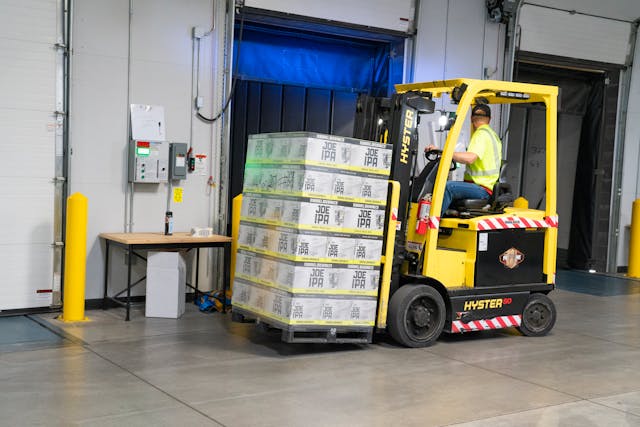
Forklift operator moving pallets in a Melbourne distribution warehouse

Conditions the worker needs to know about

The details that decide whether a worker comes back for the second shift.

Address and entry
The street address, which gate or door to use, where to park and who to ask for, not just the suburb
Start and finish
Exact times, the days, any rotating roster, and whether early finishes or extended shifts are likely
Temperature
Ambient, chilled or freezer, and how long a worker spends in each zone across a shift
PPE
What you hand out on the day, such as freezer jackets or vests, and what the worker must bring, such as steel cap boots
Induction
Who gives the site induction, how long it takes and whether it is paid time on the first shift
Booking length
One shift, a week, a peak period or ongoing, and whether it might extend

Tickets, licences and the award

  • Forklift licence class. Counterbalance and reach trucks need the LF class of High Risk Work Licence. An order picking forklift, where the operator is raised with the load, needs LO. Say which trucks the worker will drive so the right class is sighted before anyone is put forward. Our guide to forklift licence classes sets out the difference.
  • Site competencies. If your site requires its own truck assessment or a verification of competency before a licensed operator drives, say so in the request, so the first shift allows time for it.
  • Other checks. Say if the site needs a police check, a working with children check, or customer specific clearance, for example for pharmaceutical or bonded stock, and how much notice those checks take.
  • The award and the duties. Warehouse casuals are usually employed under the Storage Services and Wholesale Award 2020, and the classification level follows the duties. Describing the duties accurately, including forklift driving and any leading hand work, lets the provider classify and pay the worker correctly. See what you pay for in a labour hire rate for how that flows into the charge rate.
  • Your safety duties. As the host you share health and safety duties for labour hire workers with the provider. The request is a good place to flag the main hazards, such as forklift traffic, racking or cold exposure. Our guide to host employer OHS duties covers this in more detail.

Cold stores, the first shift and common mistakes

Cold and freezer work. Chilled and freezer stores need workers who are prepared for the cold and the breaks that go with it. Say the temperature of each zone, how long a worker spends inside at a stretch, what freezer gear you provide and whether the worker needs their own thermal layers. Cold storage labour hire covers this work in more detail.

The first shift. Name one person who meets the worker, gives or arranges the site induction, shows them the sign in point, the amenities and the emergency exits, and checks in with them during the shift. The host gives the site specific induction, because the host controls the site. A provider checks tickets, licences and right to work beforehand, so the worker arrives with tickets checked, ready for your site induction.

Timesheets. Say who will approve hours and how, so the worker knows where to sign in and out from the first day. Labour hire timesheets and invoicing explains how approved hours flow into pay and the weekly invoice.

Common mistakes. The requests that go wrong are usually short: a job title and a suburb, with no start time, no equipment and no mention of the freezer. Other common gaps are asking for a "forklift driver" without saying which truck, leaving out the heaviest lift, and not saying a booking might run for several weeks, so the worker has other work lined up. Each one is fixed by a line in the request.

Notice. Give as much notice as you can, and say if the date or numbers may change. A provider should confirm in writing who it can supply before anyone starts, and tell you straight away if it cannot cover a request.

Bluestone Labour Group supplies casual pickers, packers, storepersons, dispatch hands and licensed forklift operators to warehouses across Melbourne. Our workers are casual employees on our payroll under the relevant award, with tickets checked, ready for your site induction. Bluestone does not supply PPE. We hold Victorian Labour Hire Licence VICLHL11535. See warehouse staff hire and forklift operator hire for the roles we supply, or send a warehouse staff request.

Warehouse labour hire request checklist

  • Roles and how many of each, with the tasks each one does
  • Pick method (RF scanner, voice or paper) and the warehouse system used
  • Trucks on site, highest racking level, and the licence class needed (LF or LO)
  • Heaviest regular lift and any lifting aids
  • Site address, entry point, parking and the person to ask for
  • Shift days, start and finish times, and any roster pattern
  • Ambient, chilled or freezer, and time spent in each
  • PPE you provide on the day, and what the worker must bring
  • Who gives the site induction and approves timesheets
  • Any extra checks the site needs, and the booking length

Frequently asked questions

The roles and the tasks each one does, the pick method and equipment, any forklift licence class needed, the site address and entry point, the shift start and finish, the store temperature, the PPE you supply and what the worker must bring, who gives the site induction and meets the worker, and how long the booking runs.

Yes. A counterbalance or reach truck needs the LF class of High Risk Work Licence, and an order picker where the operator lifts with the load needs LO. Say which trucks are on site and the lift heights, so the provider sights the right class before the worker is put forward.

It depends on the agreement between the host and the provider. Bluestone does not supply PPE. The request should list what the host provides on the day, such as freezer jackets or hi vis vests, and what the worker must bring, such as steel cap boots.

The host gives the site specific induction, because the host controls the site, its traffic management, its racking and its emergency procedures. The provider checks tickets and right to work beforehand, so the worker arrives ready for that induction.

Related guides

Need casual staff?

Tell us the roles, the site, the start date and how long for, and we confirm in writing who we can supply before anyone starts. Looking for work instead? Register as a worker.

Bluestone assistant

Ask us anything about our services.

Call 0410 672 349 Request workers