Planning Warehouse Labour for the Peak Season

Published 15 September 2026 by Bluestone Labour Group.

Peak season in a Melbourne distribution centre does not arrive as a straight line. Order volume climbs for several weeks, holds at the top for the busiest fortnight, then tapers away again, and the staffing plan has to follow the same shape. A distribution centre in Truganina, Laverton North or Derrimut that treats peak as a single extra number added to the usual roster tends to find out the gap in that plan during the worst possible week.

This piece is written for distribution and operations managers planning the next peak. It covers when the ramp up should actually start, what a forecast needs to contain before a provider can act on it, why a four week lead time changes who turns up, and how the wind down works once the peak has passed. None of it depends on which system generates the demand forecast. It depends on the forecast reaching a labour provider early enough to act on, in a form that says more than a single number.

When to start the ramp up

Work back from the peak week, not forward from today.

Work back from the peak week

Set the date the extra volume actually lands, then count backwards to a start date that leaves time for induction and a settling shift. Working forward from today instead usually produces a start date that is later than the site needs.

Read last year's pattern

Dispatch and inbound data from the previous peak shows when volume actually turned, not when the calendar says it should have. A forecast built on that pattern is more reliable than one built on a guess at this year's timing.

Match the ramp curve to the roster

A build up over two or three weeks needs headcount added in stages, not one intake on day one. Staggering the start dates also spreads the induction load instead of putting the whole crew through it on the same morning.

Confirm the taper as well as the build up

The drop off date matters as much as the start date. A provider rostering shifts against a known taper can move people onto other sites in an orderly way, rather than everyone finishing on the same day with nowhere to go.
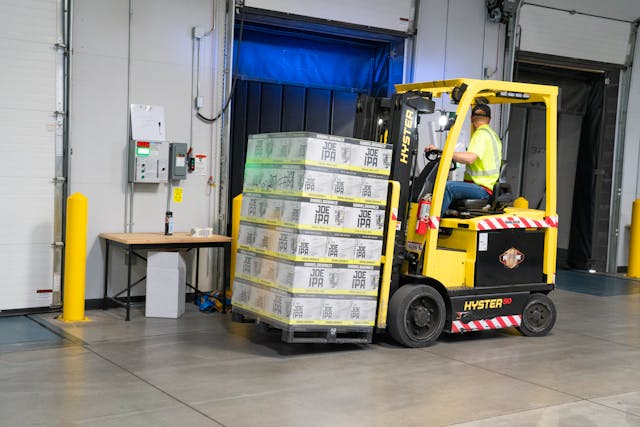
Warehouse pickers working an aisle in a Melbourne distribution centre during peak season

What a forecast needs to contain

A headcount on its own is not something a roster can be built against.

Peak week and shoulder weeks
Not just the busiest week, the build up and taper either side of it
Shift pattern per phase
Day, afternoon or night, and whether it changes as volume climbs
Skill mix
The split between picking, packing, forklift and dispatch, not one blended number
Site induction and PPE
Requirements stated up front so nobody is turned away at the gate

Why four weeks changes who you get

  • With four weeks notice a provider can match experience to the site, sending people who have done picking or dispatch before rather than whoever is available that afternoon.
  • Site specific induction happens before the peak starts, not during the first busy shift, so the crew is productive from the first hour rather than the second week.
  • A provider can hold a buffer above the requested number, so a no show during the peak is covered rather than leaving a station empty.
  • Shift patterns settle in advance instead of being negotiated day by day once the peak has already started and everyone is short on time.

A same day request during peak gets whoever is free that day. The difference is not availability, it is whether the person arriving already knows how to work a pick face at pace.

Winding down without a redundancy conversation

Workers supplied through Bluestone are engaged by Bluestone, either as casual employees or as ABN contractors, not by the host site. That distinction matters most at the end of a peak. When volume drops back to the usual level, the host simply stops requesting shifts for the extra crew. There is no employment relationship on the host side to end, so no redundancy process, no notice period and no termination paperwork falls on the distribution centre. The site keeps the flexibility to scale for the next spike without carrying a permanent headcount through the quiet months in between.

The taper works best when it is planned rather than sudden. A forecast that shows the drop off in stages lets a provider move workers onto other sites as demand falls, rather than releasing the whole crew on the same day. That is better for the workers, and it means the same people are more likely to be available again for the next peak.

Bluestone Labour Group holds Victorian Labour Hire Licence VICLHL11535. We build the roster to the forecast, not the other way around. See warehouse staff hire and forklift operator hire for the roles we place into peak season crews.

Frequently asked questions

Work back from the peak week itself, not from when the extra hands feel needed. Most Melbourne distribution centres should have numbers, shift patterns and start dates confirmed with a provider four to six weeks before the first peak shift, not four to six days.

The peak week and the shoulder weeks either side, the shift pattern for each phase, the skill mix between picking, packing, forklift and dispatch, and the site induction and PPE requirements. A headcount on its own is not enough to build a roster against.

No. Workers supplied by Bluestone are engaged by Bluestone, as casual employees or ABN contractors, not by the host. When the peak ends, the host simply stops requesting shifts. There is no employment relationship on the host side to end, so no redundancy process applies to the host.

Yes, provided the pattern is given in advance. A forecast that shows the build up, the peak week and the taper lets a provider roster shifts to match, rather than holding one flat number for the whole period or scrambling to add people once the peak has already started.

Where this applies

Planning your next peak?

Tell us the forecast and the shift pattern and we will build the ramp up against it. Looking for work instead? Register as a worker.

Bluestone assistant

Ask us anything about our services.

Call 0410 672 349 Request workers