Published 19 October 2026 by Bluestone Labour Group.
Subdivision civil works labour hire works best when the crew is planned stage by stage rather than booked one gap at a time. A residential subdivision package moves from bulk earthworks to drainage and sewer, then road pavement, kerb and channel, footpaths and handover. Each stage needs a different mix of labourers, pipe layers, plant operators and concreters, and the head count rises and falls across the programme. A provider who knows the sequence can have the right tickets ready a week before each stage starts, and keep the same core workers on your job from the first cut to the last crossover.
This guide is for site managers and project managers at Tier 2 and Tier 3 civil contractors building subdivision stages in Melbourne's growth corridors. It sets out what each stage asks for, how to brief a provider and how to hold a crew together through a long package.
The stages overlap on most jobs, but the crew mix changes at each one.
Topsoil strip, cut and fill, lot grading and trimming. The crew is weighted to plant: excavator, dozer, grader, roller and water cart operators with their VOCs, plus civil labourers for setting out, spotting and sediment controls.
Trenching, pipe laying, bedding, backfill and pit construction. This is the most labour heavy stage. You need pipe layers who can run a laser, labourers comfortable working beside an excavator, and workers with confined space and gas testing tickets for pits and manholes.
Boxing out, subgrade preparation and placing crushed rock in layers to level and compaction. The crew shifts back towards graders, rollers and trucks, with labourers on levels, rakes and test points.
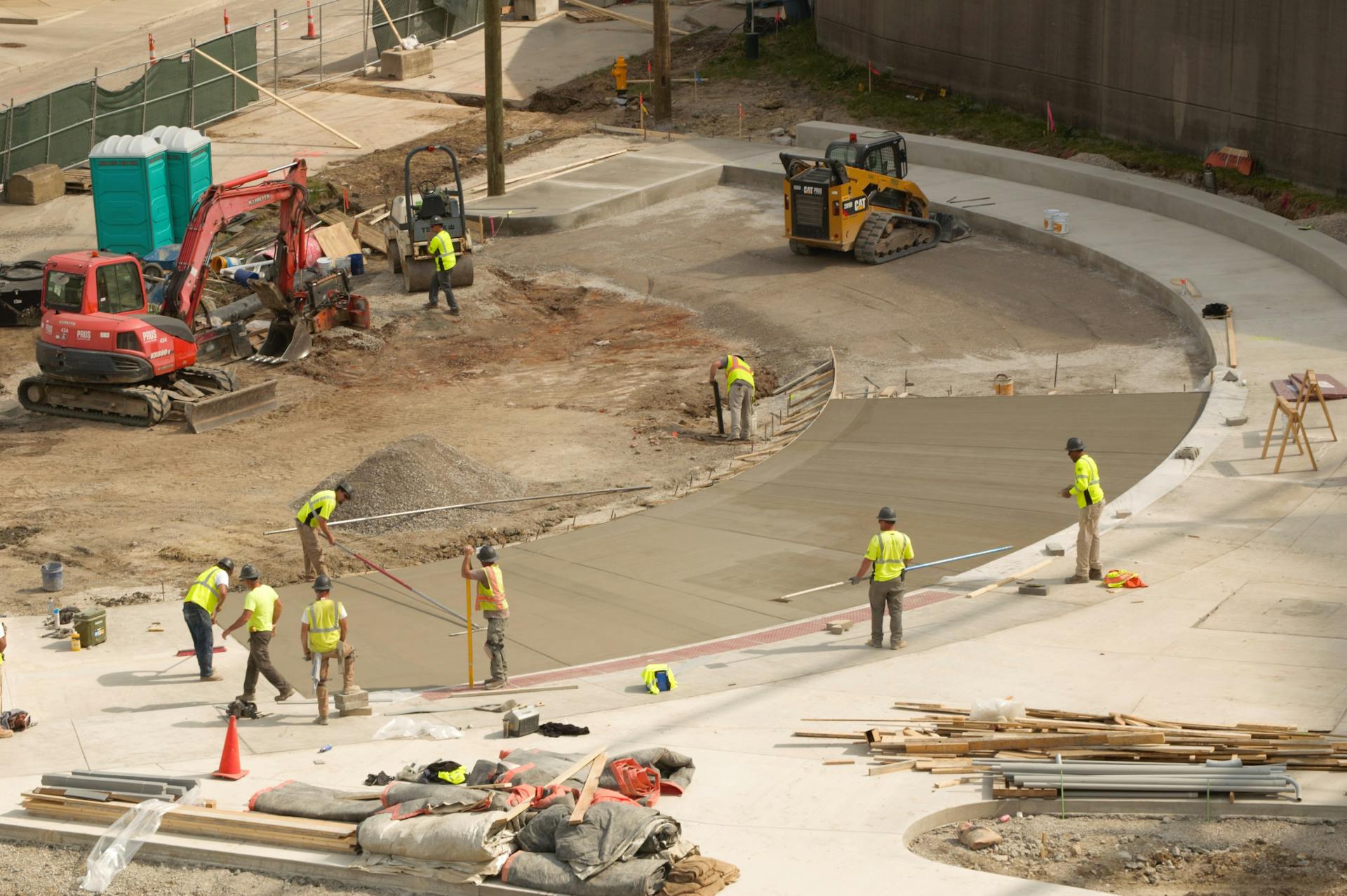
Extruded kerb and channel, footpaths, crossovers and service pits, then landscaping, line marking, defects and cleanup. Concreters and formworkers join the crew.
Ask for these in the booking so nobody is turned away at the induction.
A rough plan across all stages is more useful than a perfect booking for next Monday. It lets the provider line up pipe layers before the drainage stage starts and concreters before the kerb machine arrives, instead of searching for them the day before.
The head count rises in the middle. On most subdivision stages the labour peak sits in drainage and sewer, when several pipe crews may run at once, and again when kerb, footpaths and crossovers overlap. Earthworks and pavement lean on plant operators rather than labourers. Plan the labour hire numbers against that curve so you are not carrying workers through the plant heavy weeks or short of them when the trenches open.
Keep a core crew and flex around it. The workers who know your levels, your foreman and your site rules are worth more on day thirty than a new face. Ask the provider to treat a small group as your core crew for the whole package and to add short term workers around them for the peaks. When the next stage of the estate starts, the same core crew can move straight across with no new induction.
Move workers between stages, not off the job. A civil labourer who spotted for the excavator during drainage can rake and level on pavement, then strip formwork on footpaths. Tell the provider when a worker's tasks will change so the worker is briefed and any extra ticket is confirmed first. That keeps the crew together and the knowledge on site.
Weather and gaps. Wet weather stops earthworks quickly, and an absent pipe layer can stop a whole pipe crew. Agree how rain days are handled before the job starts, and ask the provider how quickly they can replace a worker at short notice. Our guide on covering a crew gap at 24 hours notice sets out what to have ready.
How the workers are engaged. Bluestone engages civil labourers, pipe layers and concreters as casual employees on our payroll under the Building and Construction General On site Award 2020, with WorkCover and superannuation from the first shift. The only exception is a plant operator who brings and runs their own machine. We hold Victorian Labour Hire Licence VICLHL11535.
Where the work is. Most subdivision civil work in Melbourne sits in the growth corridors: the west through Melton and Rockbank and Tarneit and Truganina, the north through Craigieburn, Mickleham and Wollert, and the south east through Clyde, Officer and Pakenham. We supply civil labourers, plant operators and concreters across all of them.
It changes by stage. Bulk earthworks needs plant operators and a few civil labourers. Drainage, sewer and water needs pipe layers, labourers and workers with confined space tickets. Pavement leans on grader and roller operators, and kerb, footpaths and crossovers bring in concreters and formworkers.
On most jobs the labour peak is the drainage and sewer stage, when several pipe crews can run at once, with a second peak when kerb, footpaths and crossovers overlap. Earthworks and pavement are weighted towards plant operators.
Yes. Ask the provider to keep a core crew on your package from earthworks to handover and to add short term workers around them for the peaks. Workers who already know your site and supervisors start each new stage faster and need no new induction.
At Bluestone, civil labourers, pipe layers and concreters are casual employees on our payroll under the Building and Construction General On site Award 2020, with WorkCover and superannuation from the first shift. The only exception is a plant operator who brings their own machine.
Ask us anything about our services.